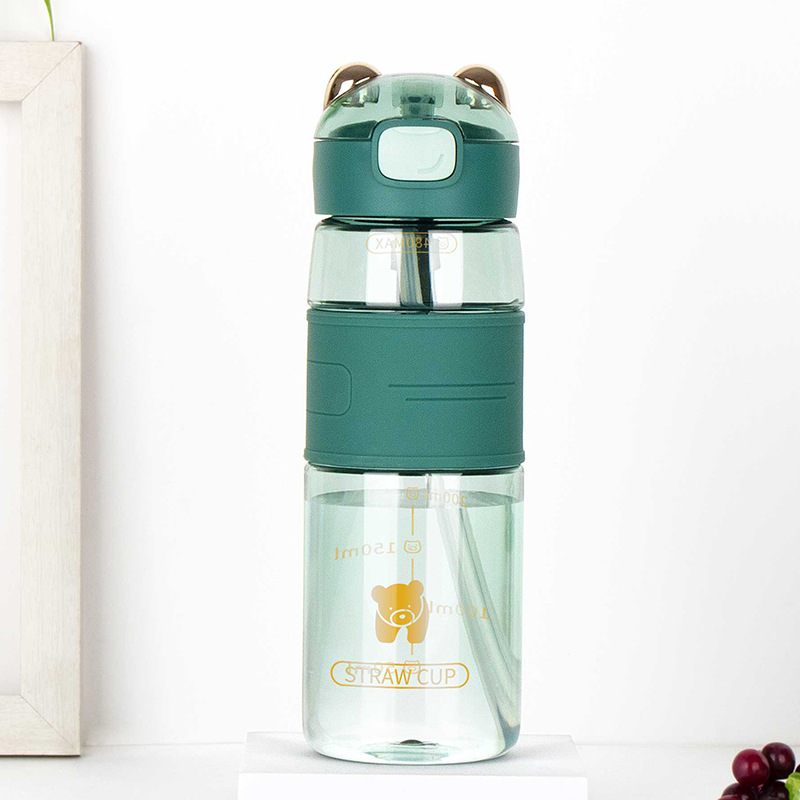
In today's fast-paced life, sports water cups have become essential items in People's Daily lives. Especially for fitness enthusiasts and outdoor sports enthusiasts, a water cup with good heat preservation performance is of vital importance. The heat preservation performance of a water cup is influenced by multiple factors, among which the quality of the cup body is one of the most fundamental and crucial ones. This article will delve into how different cup body qualities affect the heat preservation performance of water cups, helping consumers make wiser purchasing decisions.
I. Overview of Thermal Insulation Principles
Before discussing the influence of materials, it is necessary to first understand the basic principles of insulation. The thermal insulation performance mainly depends on two key factors: thermal conductivity and thermal radiation. Thermal conductivity refers to the ability of a material to transfer heat, while thermal radiation refers to the phenomenon where heat is emitted outward in the form of electromagnetic waves. The design goal of high-quality insulated cups is to minimize these two types of heat losses as much as possible.
Vacuum insulation technology is the core of modern insulated cups. By creating a vacuum layer between the inner and outer walls, it almost completely eliminates heat loss caused by heat conduction and convection. However, even with a vacuum layer, the quality of the cup body can still affect the overall insulation effect, especially when the vacuum layer is damaged or the design is imperfect.
Ii. Common Cup Body Types and Their Heat Preservation Characteristics
1. Stainless steel material
Stainless steel is currently the most commonly used material for thermos flasks, especially 304 and 316 medical-grade stainless steel. Stainless steel has the following heat-insulating properties:
Low thermal conductivity: The thermal conductivity of stainless steel is relatively low, approximately 16-20 W/(m·K), which is much lower than that of metals such as aluminum. This helps to reduce heat loss through the cup walls.
Durability: Stainless steel has high strength and can maintain the integrity of the vacuum layer for a long time, thereby maintaining the insulation effect.
Reflective performance: The polished surface of stainless steel can reflect part of the thermal radiation, further reducing heat loss.
High-end thermos flasks usually adopt a double or triple stainless steel structure with a vacuum in the middle. This design can keep the heat for up to 12 to 24 hours.
2. Glass material
Glass water cups have their unique features in terms of heat preservation:
Extremely low thermal conductivity: The thermal conductivity of glass is approximately 1 W/(m·K), which is much lower than that of metals. Theoretically, its insulation performance should be better.
Fragility: Glass is fragile and it is difficult to create a vacuum layer, so the heat preservation performance of most glass cups is average.
Special design: A few high-end glass insulated cups adopt a double-layer design and are filled with inert gas, providing insulation for 4 to 6 hours.
The advantage of glass cups lies in their extremely high chemical stability, which does not release any harmful substances and is suitable for holding various beverages.
3. Plastic material
Plastic sports water cups are lightweight and shock-resistant, but they perform poorly in terms of heat preservation.
High thermal conductivity: The thermal conductivity of common plastics is approximately 0.2-0.5 W/(m·K), which is lower than that of metals. However, the single-layer structure cannot effectively insulate.
Structural limitations: Plastic is difficult to withstand vacuum manufacturing processes. Most plastic "insulated cups" only provide limited insulation by their thick walls.
Improved materials: The new polypropylene (PP) or Tritan materials have been improved, but their thermal insulation performance still cannot compare with that of stainless steel.
The advantages of plastic cups lie in their lightness and low cost, making them suitable for short-term use or scenarios where long-term heat preservation is not required.
4. Ceramic material
Ceramic water cups perform moderately in terms of heat preservation
Thermal conductivity: The thermal conductivity of ceramics is approximately 1.5 W/(m·K), which lies between that of glass and metal.
Practical application: The heat preservation effect of traditional single-layer ceramic cups is limited. Modern technology can produce double-layer ceramic insulated cups, and the effect can last for 6 to 8 hours.
Other advantages: Ceramic cups are beautiful and chemically stable, but they are relatively heavy and fragile.
Iii. Material Combination and Insulation Performance Optimization
Modern high-end insulated cups often use a combination of multiple materials to optimize performance:
Stainless steel inner tank + plastic outer shell: It not only ensures the heat preservation performance of the inner tank, but also reduces weight and prevents scalding.
Glass inner liner + silicone protective case: It provides a pure taste while enhancing heat preservation and shock resistance.
Ceramic-coated stainless steel: Combining the chemical stability of ceramics with the structural strength of stainless steel.
These composite designs often can achieve an insulation effect of more than 12 hours, while taking into account both safety and convenience in use.
Iv. Other material-related factors that affect insulation performance
In addition to the basic material, the following factors will also indirectly affect insulation:
Cup mouth design: The wide mouth design enables faster heat dissipation, while the narrow mouth design keeps the cup warm for a longer time.
Sealing material: The quality of silicone rubber sealing rings affects heat dissipation and sealing performance.
Surface treatment: Mirror polishing is more conducive to reflecting thermal radiation than a frosted surface.
The material of the lid: Plastic LIDS have better heat insulation than metal LIDS.
V. Suggestions for Material Selection
Select the appropriate material according to the usage requirements
Long-term heat preservation requirements: Double-layer/triple-layer stainless steel vacuum insulated cups are preferred.
For short trips, a lightweight plastic cup or a single-layer stainless steel cup will suffice.
High purity requirements for beverages: Consider glass inner linings or ceramic-coated cups.
For children: Choose plastic cups that are shock-resistant or made of materials with protective covers.