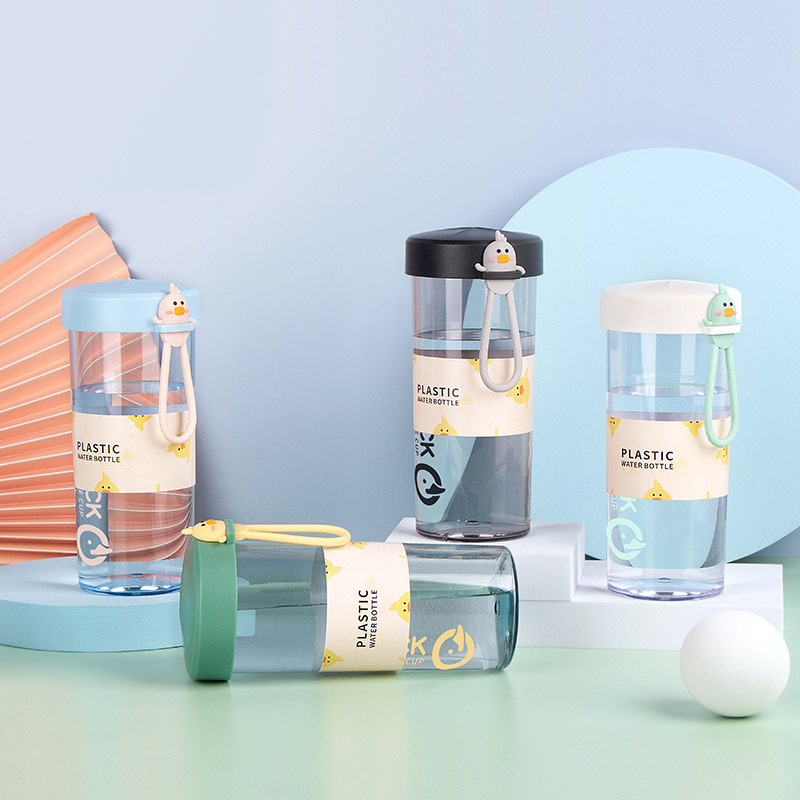
The relationship between the capacity of a water bottle and its heat preservation effect is a complex and multi-dimensional issue, involving multiple aspects such as physics, materials science, and practical usage scenarios. To fully understand this relationship, we need to analyze it from the following aspects: how the capacity of the water bottle affects the heat preservation effect, the physical principles of heat preservation effect, the influence of materials on heat preservation effect, and the precautions in actual use.
I. The Influence of Water Bottle Capacity on Heat Preservation Effect
The relationship between heat capacity and heat dissipation area
The capacity of a water bottle directly determines the volume of the liquid inside it, and the volume of the liquid is closely related to its heat capacity (that is, the ability to store heat). According to thermodynamic principles, heat capacity is directly proportional to the mass of a substance. Therefore, water bottles with larger capacity can store more heat and thus maintain the temperature of the liquid for a longer time under the same conditions.
However, water bottles with larger capacities usually have a larger surface area as well. The larger the surface area is, the faster the heat dissipates. This is because heat is exchanged with the external environment through the bottle wall. The larger the surface area, the higher the rate of heat exchange. Therefore, although large-capacity water bottles have a greater heat capacity, their heat dissipation area is also larger, which to some extent offsets their heat preservation advantage.
Ii. Physical Principles of Insulation Effect
Heat conduction, convection and radiation
The insulation effect mainly depends on three ways of heat transfer: heat conduction, convection and radiation.
Heat conduction: Heat is transferred from the high-temperature area to the low-temperature area through the bottle wall. The material and thickness of the bottle wall are the key factors affecting heat conduction.
Convection: The heat inside a liquid is transferred through convection, and the design and sealing of the bottle mouth can affect the effect of convection.
Radiation: Heat radiates outward in the form of electromagnetic waves. The surface treatment and color of the bottle body will affect the efficiency of radiation.
Vacuum insulation technology
Modern thermos flasks usually adopt vacuum insulation technology, that is, a vacuum layer is formed between the bottle walls. The vacuum environment almost completely blocks heat conduction and convection, thereby significantly improving the insulation effect. Whether it is a large-capacity or small-capacity water bottle, as long as vacuum insulation technology is adopted, its heat preservation effect will be greatly improved.
The relationship between the capacity of a water bottle and its heat preservation effect is not a single positive or negative correlation, but is influenced by multiple factors. Although large-capacity water bottles have a greater heat capacity, their heat dissipation area is also larger. Although small-capacity water bottles have a smaller heat capacity, their heat dissipation area is also smaller. In addition, the heat preservation effect is also influenced by the bottle material, design and application scenarios. Therefore, when choosing a water bottle, factors such as capacity, heat preservation performance and portability should be comprehensively considered based on actual needs to achieve the best usage effect.